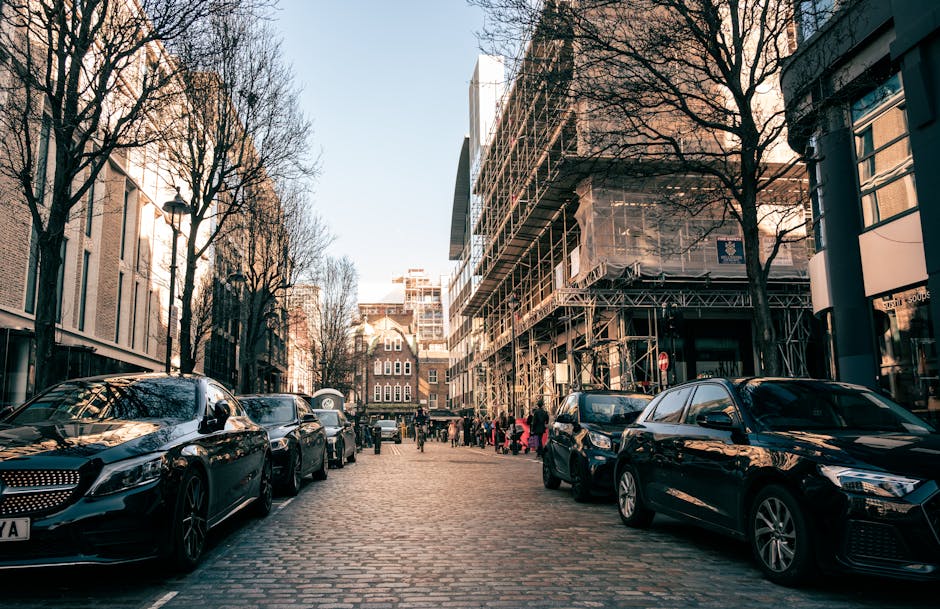
Parking and loading rules for removals near Hammersmith Broadway
If you are planning a move around Hammersmith Broadway, parking can be the part that quietly causes the biggest headache. The van is booked, the boxes are packed, and then you realise there may be yellow lines, loading restrictions, busier-than-you-expected traffic, or no sensible place to stop. That is exactly why understanding the parking and loading rules for removals near Hammersmith Broadway matters so much. It is not just about avoiding a ticket. It is about keeping the move moving, protecting your belongings, and making the whole day feel a lot less chaotic.
In a spot as busy as Hammersmith Broadway, the difference between a smooth removal and a stressful one often comes down to planning the loading point properly. This guide breaks down how the rules usually work, what to look out for, what mistakes people make, and how to organise the job in a way that gives you the best chance of a calm, efficient move. You do not need to be a transport planner. You just need a practical plan.
Here is the short version: think about access early, check whether stopping is actually allowed, allow time for rush-hour pressure, and always assume the road will be busier than it looks on a map. Sounds obvious, I know. Yet plenty of removals go sideways because someone assumed the van could just pull up outside. Let's not do that.
Table of Contents
- Why Parking and loading rules for removals near Hammersmith Broadway Matters
- How Parking and loading rules for removals near Hammersmith Broadway Works
- Key Benefits and Practical Advantages
- Who This Is For and When It Makes Sense
- Step-by-Step Guidance
- Expert Tips for Better Results
- Common Mistakes to Avoid
- Tools, Resources and Recommendations
- Law, Compliance, Standards, or Best Practice
- Options, Methods, or Comparison Table
- Case Study or Real-World Example
- Practical Checklist
- Conclusion
- Frequently Asked Questions
Why Parking and loading rules for removals near Hammersmith Broadway Matters
Hammersmith Broadway is not the kind of place where you can wing it. It sits in a busy west London corridor with steady traffic, regular buses, pedestrians crossing in waves, and lots of competing road users. That means the space a removal van needs is often limited, and the margin for error is tiny.
For removals, parking and loading rules matter because they affect three things at once: access, timing, and compliance. If the van is too far away from the entrance, everything becomes slower and more tiring. If the stop is in the wrong place, you risk enforcement action. If the timing is off, you can end up loading in a rush while traffic builds around you. None of that is ideal, especially when you are trying to move furniture through narrow hallways or out of a flat above a shop.
There is also the human side. On moving day, people are already stretched. You are juggling keys, boxes, children, pets, lifts, and maybe one last cup of tea before the first item goes out the door. A clear parking plan gives everyone one less thing to worry about. Truth be told, that can make a bigger difference than people expect.
Expert summary: Near Hammersmith Broadway, the smartest approach is usually to plan the loading point before moving day, assume stopping space is limited, and build in more time than you think you will need. That simple habit reduces delays, penalties, and last-minute panic.
How Parking and loading rules for removals near Hammersmith Broadway Works
At a practical level, parking and loading rules decide where a removal vehicle can stop, for how long, and under what conditions. In London, these rules are often enforced quite actively, so the key is not just knowing there are restrictions, but understanding how they affect a real move.
Near Hammersmith Broadway, you will typically need to think about a few common layers:
- Waiting restrictions such as single or double yellow lines.
- Loading permissions, which may be allowed only for a limited period or only in certain bays.
- Resident permit areas or shared-use parking spaces.
- Bus stops, clearways, taxi ranks, and access routes that cannot be blocked.
- Time-based restrictions that may change at peak hours.
For removals, the important part is that "loading" is not the same as "parking". In everyday language people mix the two, but enforcement officers usually do not. Loading generally means active, continuous movement of goods between the property and the vehicle. If the van is stopped but nothing is being moved, that can be a problem.
A good rule of thumb: if the vehicle is there to transfer household items and the team is clearly working, you are in a stronger position than if the van is just sitting outside for ages. Even so, the exact rules depend on the location, signage, and local traffic controls. So you should always check the street itself, not just rely on guesswork or what worked on a different move in another part of London.
In practice, this means looking at the road outside the property and asking: where can the van legally stand, how long can it stay there, and what happens if the space is taken when you arrive? That last question matters more than people think. On a busy stretch near Hammersmith Broadway, another vehicle can easily take the only convenient spot while you are still carrying the first boxes downstairs.
What loading access usually looks like in real life
Most removals work best when the van can get as close as possible to the front door or building entrance without blocking traffic. If there is a loading bay, that is often the easiest option, but only if the timing and permit conditions fit the move. If not, the removal team may need a short-stop arrangement or a managed unload from a nearby legal stopping point.
Sometimes the best spot is not right outside the property at all. It might be a bit further down the street where stopping is permitted and pedestrian flow is lower. That is not glamorous, but it works. And on a stressful moving day, "works" is a lovely word.
Key Benefits and Practical Advantages
Planning the parking and loading side properly brings a few very real benefits. Some are obvious, others only become obvious after you have seen a move go wrong.
- Less time wasted: the team can get straight to work instead of circling for a legal stopping point.
- Lower risk of enforcement issues: if the vehicle is positioned correctly, you reduce the chance of tickets or disputes.
- Safer handling: shorter carrying distances usually mean fewer dropped items, fewer strained backs, and fewer awkward turns with furniture.
- Better coordination: everyone knows where to bring items, which makes the move feel more organised.
- Less disruption to neighbours and pedestrians: a tidy loading setup is usually much easier on everyone around you.
There is also a financial angle. Delays can increase labour time, parking stress, and sometimes extra vehicle movements. Even if no one wants to talk about cost on moving day, it is there in the background. A little planning can save more than it costs, especially in a busy London location where time is rarely on your side.
One more thing. A sensible loading setup often helps with fragile items. The fewer times a sofa needs to be pivoted through a tight space because the van is parked awkwardly, the better. Simple, but true.
Who This Is For and When It Makes Sense
This matters for anyone moving from, to, or through the Hammersmith Broadway area, but some situations are especially likely to need careful planning.
- Flat moves: particularly upper-floor flats with stair access, narrow entrances, or shared hallways.
- Office or small business removals: where timing has to fit around staff, customers, and building access.
- Moves involving large furniture: wardrobes, sofas, white goods, desks, and beds are harder to manage if the van is not nearby.
- Moves with a tight schedule: if you have key handover times, storage deadlines, or lift bookings, parking delays can snowball.
- Anyone moving on a weekday morning or evening: because traffic pressure is usually higher.
If you are simply collecting a few items from a house with private driveway access, you may not need the same level of planning. But near Hammersmith Broadway, even a smaller move can become fiddly if the road layout or restrictions are unforgiving.
It is also worth saying that renters and landlords often underestimate this part. The move itself gets all the attention; the stopping point gets none. Then the van arrives and everyone suddenly becomes an amateur traffic officer. Not ideal.
Step-by-Step Guidance
Below is a practical way to approach removals parking and loading near Hammersmith Broadway without overcomplicating it. You do not need a perfect system. You need a workable one.
1. Check the street outside the property
Start with the actual road, not a vague memory of it. Look for signs about waiting restrictions, loading, resident parking, and time limits. If there are double yellow lines, that does not automatically mean you cannot stop for loading, but it does mean you need to understand the local rules carefully.
2. Identify the closest sensible loading point
Ask where the van can legally stop with the shortest practical carrying distance. Sometimes that is outside the address. Sometimes it is a side street, side road, or a marked bay nearby. If you can get the loading point sorted before the van arrives, the whole day becomes easier.
3. Match the timing to the restrictions
Some loading arrangements are only realistic at quieter times. If you are moving near peak traffic hours, you may need a different plan from someone moving on a quiet midweek morning. This is where a bit of flexibility pays off. An early start can make a surprisingly big difference.
4. Build in arrival buffer time
In west London, traffic has a way of being just slightly worse than expected. Always allow some buffer. If the van is late or the street is congested, you want breathing room. You do not want everyone standing in the rain, staring at the corner, wondering where the vehicle has got to.
5. Protect the loading route inside the building
The parking plan is only half the story. Make sure the path from the property to the van is clear. Move rugs, open doors, protect walls if needed, and make sure there is space to turn larger items. A neat hallway can save you more time than a closer parking space, honestly.
6. Keep communication simple on the day
One person should know where the van will stop, who is meeting it, and what to do if the spot is taken. A quick phone call can save ten minutes of confusion. That sounds small. It is not small when you are carrying a fridge.
7. Have a fallback plan
Plan B matters. What if the loading bay is occupied? What if traffic blocks the street? What if a neighbour's delivery van is in the way? A good mover thinks one step ahead, because on a busy London road you often have to.
Expert Tips for Better Results
After plenty of moves in tight urban areas, a few practical habits stand out. These are the little things that tend to prevent bigger problems.
- Do a quick recon the day before: a five-minute walk or drive-by can tell you far more than a map app.
- Keep the van's unloading side in mind: the best parking position is not always the nearest one, but the one that lets the team work safely.
- Use concise signage or a polite note where appropriate: not to claim a space unlawfully, but to signal that loading is in progress if the rules allow it.
- Prepare the first load separately: keep essentials, documents, and the most awkward items easy to reach.
- Think about weather: a wet day can slow loading a lot, especially if items are being carried over a longer distance.
A small but useful point: if your move involves a communal entrance or shared building access, tell neighbours or the building manager in advance if you can. Not everyone will remember, but enough people will that the day usually runs smoother. And yes, the lift is always busiest when you need it most. Funny how that works.
Another tip is to avoid making assumptions about permits, even if you have moved somewhere nearby before. Hammersmith Broadway and the streets around it can have different restrictions from one road to the next. What worked on a neighbouring street might not work at all on yours.
Common Mistakes to Avoid
Most problems with removals parking and loading are not dramatic disasters. They are small planning mistakes that stack up. Here are the ones worth avoiding.
- Assuming loading is always allowed: it may be allowed only in specific places or for specific durations.
- Leaving the parking decision until the van arrives: that often leads to circling, delay, and pressure.
- Underestimating traffic around Hammersmith Broadway: the area is busier than it can look on a quiet afternoon.
- Parking too far from the property: every extra metre adds time and physical effort.
- Ignoring building access issues: if the entrance, lift, or hallway is awkward, the parking position matters even more.
- Forgetting about neighbours and pedestrians: blocked paths can create complaints and slow the move down.
- Not having a backup plan: a blocked bay or occupied stopping point can throw everything off if you have no alternative.
To be fair, even experienced movers can get caught out when the street is busy. But the better you prepare, the less likely you are to end up improvising on the pavement with a sofa and a worried face.
Tools, Resources and Recommendations
You do not need fancy equipment, but a few tools and practical resources make a real difference.
- Street-level observation: the simplest and often most reliable "tool" is a proper look at the road before moving day.
- Booking notes from your removals team: keep the access details in one place so nobody is working from memory.
- Phone contact list: driver, property contact, building manager, and anyone who can help solve access issues quickly.
- Moving labels and colour coding: helps the team unload efficiently once the van is in position.
- Protective materials: blankets, door guards, and floor protection can reduce damage when the carrying route is longer than expected.
If you are organising the move yourself, a simple written access plan is surprisingly helpful. Note the time window, the likely loading point, and what to do if the first option is unavailable. Nothing glamorous there. Just very useful.
Some people also find it helpful to take photos of the parking area and building entrance in advance. Not for drama. Just so the team can see what they are walking into before the day starts.
Law, Compliance, Standards, or Best Practice
Parking and loading near Hammersmith Broadway should always be approached with care because local restrictions can be enforced, and moving vehicles must not create unsafe conditions or block essential access. The exact position depends on the street, signage, road markings, and local traffic management arrangements.
As a general best practice, you should:
- read the signs on the street, not just rely on old assumptions;
- avoid blocking crossings, bus stops, junctions, cycle routes, or emergency access;
- make sure any loading activity is genuine and continuous where required;
- allow the vehicle to stop only where it is reasonably safe and lawful to do so;
- check whether the property or street requires permits, permissions, or timed arrangements.
It is also sensible to treat any loading exception carefully. Just because a vehicle is being used for removals does not mean every stopping restriction disappears. In busy London locations, local rules can be specific. If you are unsure, it is better to verify before moving day than to debate it beside a warning notice. That rarely ends well.
For businesses and landlords, there is an extra layer of duty in keeping access arrangements clear for residents, customers, or the public. Good planning is not just a convenience; it is part of sensible site management.
Options, Methods, or Comparison Table
Different loading approaches suit different properties. Here is a practical comparison to help you decide what fits best near Hammersmith Broadway.
| Method | Best for | Advantages | Watch-outs |
|---|---|---|---|
| Direct outside loading | Short residential moves, clear street access | Fastest carrying distance, simplest for the crew | Often limited by restrictions or traffic |
| Nearby legal loading bay | Busy roads, timed access windows | Usually safer and more compliant | May mean a longer carry and more planning |
| Side-street staging | Where the main road is too congested | Can reduce disruption on major roads | May need extra time and coordination |
| Managed off-peak loading | Properties with flexible timing | Often less pressure, easier manoeuvring | May not suit everyone's schedule |
In real life, the best option is the one that balances legality, safety, and carrying distance. Shortest is not always best if it creates a risk or blocks traffic. And if you are choosing between convenience and compliance, compliance wins every time. A boring answer, maybe, but the right one.
Case Study or Real-World Example
Imagine a one-bedroom flat move near Hammersmith Broadway on a weekday morning. The property sits on a busy road with limited stopping space. The first instinct is to have the van pull in close to the entrance, but the street markings make that risky. Instead, the removal team checks the road the day before, identifies a nearby legal stopping point, and adjusts the arrival time to avoid the worst of the rush.
On the day, one person stays in touch with the driver while another clears the hallway and keeps the path to the vehicle open. The carry is a little longer than everyone hoped, but it is steady and controlled. No one is rushing. No one is trying to squeeze past a parked car with a wardrobe at an awkward angle. The move takes place in a calm way, which is exactly what you want when the street outside is busy and the pavement feels narrower than expected.
The lesson is simple: a small amount of access planning can save a lot of energy. Maybe not the most dramatic story, but it is the kind that ends with fewer headaches and no nasty surprises. Sometimes that is the best kind of moving day.
Practical Checklist
Use this checklist before the van turns up. It keeps the day grounded.
- Have you checked the street signs and parking restrictions outside the property?
- Do you know the nearest lawful loading point?
- Have you allowed enough time for traffic around Hammersmith Broadway?
- Is there a backup plan if the first stopping point is occupied?
- Have you told the removal team about stairs, lifts, narrow entrances, or access codes?
- Is the route from the property to the van clear of trip hazards and obstacles?
- Have you prepared fragile items and essentials so they are easy to find?
- Have you confirmed who to contact if parking changes at the last minute?
- Are neighbours, building staff, or the landlord aware of the move if needed?
- Have you checked weather conditions that might slow loading?
If you can tick most of those off, you are in a strong position. Not perfect, maybe. But strong enough to keep the move on track.
Conclusion
The parking and loading rules for removals near Hammersmith Broadway are really about one thing: making sure the move can happen legally, safely, and without unnecessary stress. Around a busy London hub like this, a good access plan is not a nice extra. It is part of the job.
When you check the restrictions early, choose the right loading point, allow for traffic, and keep a simple backup plan in your pocket, the whole process becomes more manageable. You will notice the difference immediately. Fewer delays, fewer awkward decisions, fewer moments of standing in the street wondering what to do next.
And that matters, because moving day is already full enough without adding parking chaos into the mix. A little preparation goes a long way, and around Hammersmith Broadway, it can save the day.
Get a free quote today and see how much you can save.
Frequently Asked Questions
Can a removals van stop near Hammersmith Broadway for loading?
Sometimes yes, but it depends on the exact road, the signs, the time of day, and the local restrictions. You should always check the specific stopping rules outside the property rather than assuming it is allowed.
Is loading the same as parking?
No. Loading usually means the vehicle is actively being used to move items between the property and the van. Parking is different, and restrictions are often treated differently by enforcement officers.
How early should I plan the parking for a removal near Hammersmith Broadway?
Ideally as early as possible. A day or two before is better than leaving it until the morning of the move. The earlier you identify the access point, the fewer surprises you get.
What if someone else is already in the loading space?
That is where a backup plan helps. Have an alternative legal stopping point in mind and keep contact details ready so the driver can adjust quickly. It happens more often than people expect.
Do I need to arrange a permit for removals parking?
Possibly, depending on the street and the type of bay or restriction in place. Some areas require permits or timed arrangements, while others may allow loading under certain conditions. Always check the specific location.
What is the biggest mistake people make on moving day?
Leaving parking decisions too late. Once the van arrives and the street is busy, options become limited very quickly. A quick advance check can prevent a lot of stress.
Can the van wait while we carry items down?
That depends on the location and the rules applying there. In some places the van can remain while loading is actively happening; in others, the position or duration may still be restricted. Do not assume.
Is it better to move early in the morning?
Often, yes, because traffic may be lighter and there may be more space available. But the best timing still depends on the road, the property, and any local restrictions. Early helps, but it is not a magic wand.
What should I tell my removals team before the move?
Tell them about the nearest loading point, road restrictions, stairs, lifts, access codes, parking concerns, and any time limits. The more practical detail they have, the smoother the day tends to be.
What if the property is on a very busy road?
Then planning matters even more. You may need to use a nearby legal stopping point, move at a quieter time, or allow extra time for the load. A busy road is manageable, but only if you treat it seriously.
Are there special issues for flats near Hammersmith Broadway?
Yes. Flats often bring tighter entrances, shared access, lifts, and limited pavement space. Even if the parking is sorted, the internal route can still slow things down, so you need to plan both.
Can I just use hazard lights and stop briefly?
No, not as a substitute for proper legal loading arrangements. Hazard lights do not automatically make a stop lawful. It is better to understand the actual restrictions and work within them.